Posts

Is There A Statute Of Limitations On Crimes In Canada?

Image
Is There A Statute Of Limitations On Crimes In Canada? This blog is brought to you courtesy of  LawyerSelect.ca  - Toronto's Premier Lawyer Referral Service You may have recently read in the newspaper of a man by the name of Ronald Stan who, back in the mid-1970s, burned down a farmer’s barn in the Ontario county of Middlesex. After committing the crime, he travelled south to a small town in Oklahoma, where he resided for the next 37 years under an assumed identity. Despite being presumed dead by Canadian law enforcement, he was apprehended back where the crime was committed, 37 years later, in Middlesex County. His arrest raised an interesting question: had the limitation period for charging him with arson lapsed? Before we answer that, it’s helpful to first understand what a limitation period is. Put simply, a limitation period is a law that defines a specific window of time during which a person who’s committed a criminal offence in Canada can be charged wit...

Unreasonable Delay - How Long Is Too Long To Wait For Your Criminal Trial?

Image
Unreasonable Delay - How Long Is Too Long To Wait For Your Criminal Trial? This blog is brought to you courtesy of  LawyerSelect.ca  - Toronto's Premier Lawyer Referral Service Section 11(b) of the  Canadian Charter of Rights and Freedoms  states: 11. Proceedings in criminal and penal matters  –   Any person charged with an offence has the right ... b) to be tried within a reasonable time; The primary purpose of sec. 11(b) is to protect the individual rights of an accused person from. More specifically, the rights that are protected are: (1) security of the person, (2) the right to liberty, and (3) the right to a fair trial. The right to security of the person is protected by seeking to minimize the anxiety, concern and stigma of exposure to criminal proceedings. The right to liberty is protected by seeking to minimize exposure to the restrictions on liberty which result from things like pre-trial incarceration and restrictive bail c...

Do I Have To Give Police My Cellphone Password?

Image
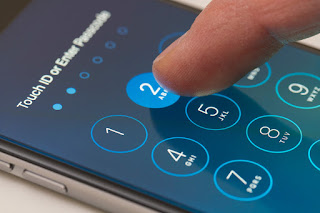
Do I Have To Give Police My Cellphone Password? This blog is brought to you by LawyerSelect.ca As technology advances, both law enforcement and criminals will seek to use it to gain an advantage on the other. The duel between police and criminals is the embodiment of the notion of ebb and flow. One of them gains an upper hand temporarily, while the other rushes to catch up. This couldn’t be more true than it is for the case of cell phones. In August, 2016, a group made up of all the Canadian Chiefs of Police met and passed a non-binding resolution that called for the enactment of a law that empowers police to unlock digital devices. For some time now, police officials have sounded off complaints that high levels of criminal activity is going undetected, and the evidence of its commission is stored on encrypted mobile phones. As it currently stands, there is no Canadian law that requires you to provide a police officer with the password to your mobile device. Police...

Does a Cellphone User Have A Privacy Interest in the Cell Records of an Account Held By Someone Else?

Image
Does a Cellphone User Have A Privacy Interest in the Cell Records of an Account Held By Someone Else? This blog has been brought to you by LawyerSelect.ca In 2013, I represented a client who was charged with fraud over $5000. The Crown alleged that he drove drunk and hit his vehicle, and rather than reporting the collision, he abandoned the vehicle and reported it stolen the next day. During the course of their investigation, police obtained a production order for the cell records of my client’s cell phone. They used the cell tower records to show that my client wasn’t near where he said he was at the time in question. But the phone didn’t technically belong to my client; rather, the line was registered under his girlfriend’s name. However, he provided police with the number to that phone when they requested a contact number, and when asked if that was his number, he responded in the affirmative. At all material times, my client used the phone like it was his, and made it c...

Do I Need The Other Person’s Permission To Record A Conversation?

Image
Do I Need The Other Person’s Permission To Record A Conversation? This blog has been brought to you by LawyerSelect.ca There is a lot of misleading information out there about the law in Canada regarding recorded conversations. Some of that misinformation is as a result of American laws finding their way to Canadians through television shows and other mediums. As it stands, the law in Canada states that it’s legal to record a conversation so long as one of the parties to the conversation consents. That means if you’re a party to the conversation, then you can legally record it, since you’re giving your consent. So, to be clear, you’re always allowed to record a conversation that you’re a party to without notifying the other party or parties or obtaining their consent. However, the law is entirely different when the conversation in question is between other people, to which you’re not a party. As such, Canadian law makes a clear distinction between the legality of re...

Aiding and Abetting: Think Twice Before Helping Out A Fugitive

Image
Think Twice Before Helping Out A Fugitive Aiding & Abetting This blog has been brought to you courtesy of  LawyerSelect.ca In  Dunlop and Sylvester v. R ,  the appellants were twice tried and convicted on a charge of rape. The indictment alleges that they did unlawfully have sexual intercourse with the victim without her consent. The appellants contend that they did no such thing, but rather, they were merely spectators at an event of which they had no prior knowledge.  On appeal to the Manitoba Court of Appeal, the court found an error in the trial judge’s charge to the jury when he instructed them on the meaning of sec. 21(1)(b) of the  CC . The trail judges read the following charge in response to a question by the jury: “Intentionally omitting to do something for the purpose of aiding another to commit an offence, that if it had been done, would have prevented or hindered the person from committing an offence amounts to aiding and ab...

If I Have a Criminal Record, Can I Still Act as a Surety?

Image
IF I HAVE A CRIMINAL RECORD, CAN I STILL ACT AS A SURETY? This blog is brought to you courtesy of LawyerSelect.ca Let’s first begin by explaining what a surety is, and what they do. Put simply, a surety is often required when an accused person is granted bail and released from custody. The Surety Explained – When someone is charged with a criminal offence, sometimes they are released at the police station, and some other times they’re held until they can go before a court who will then decide if they get released on bail. A great majority of the time, the court will require that the accused have a surety in order to get bail. As such, a surety is basically someone who promises the court that they’ll keep an eye on the accused, until his or her charges have been dealt with. They’re usually required to live with the accused, supervise the accused, and ensure that the accused obeys all the terms of the bail agreement. Some examples of these terms are: ·  ...